The New Standard for Hospital Discharge Efficiency
A Smarter Approach to Discharge Documentation
Hospital discharge efficiency is no longer just an operational goal.
It is a clinical priority.It is a financial strategy.It is a compliance safeguard.And increasingly, it is a physician well-being issue.
For hospitals between 20 and 500 beds, discharge delays create a ripple effect — slowing admissions, increasing length of stay, delaying billing, and adding pressure on doctors and MRD teams.
At PatientLens AI, our mission is clear: help hospitals run smoothly and stay compliant with digital tools for discharge, claims, and medical records management.
This article explores what the new standard for hospital discharge efficiency truly looks like — and how hospitals can achieve it safely, sustainably, and with measurable ROI.
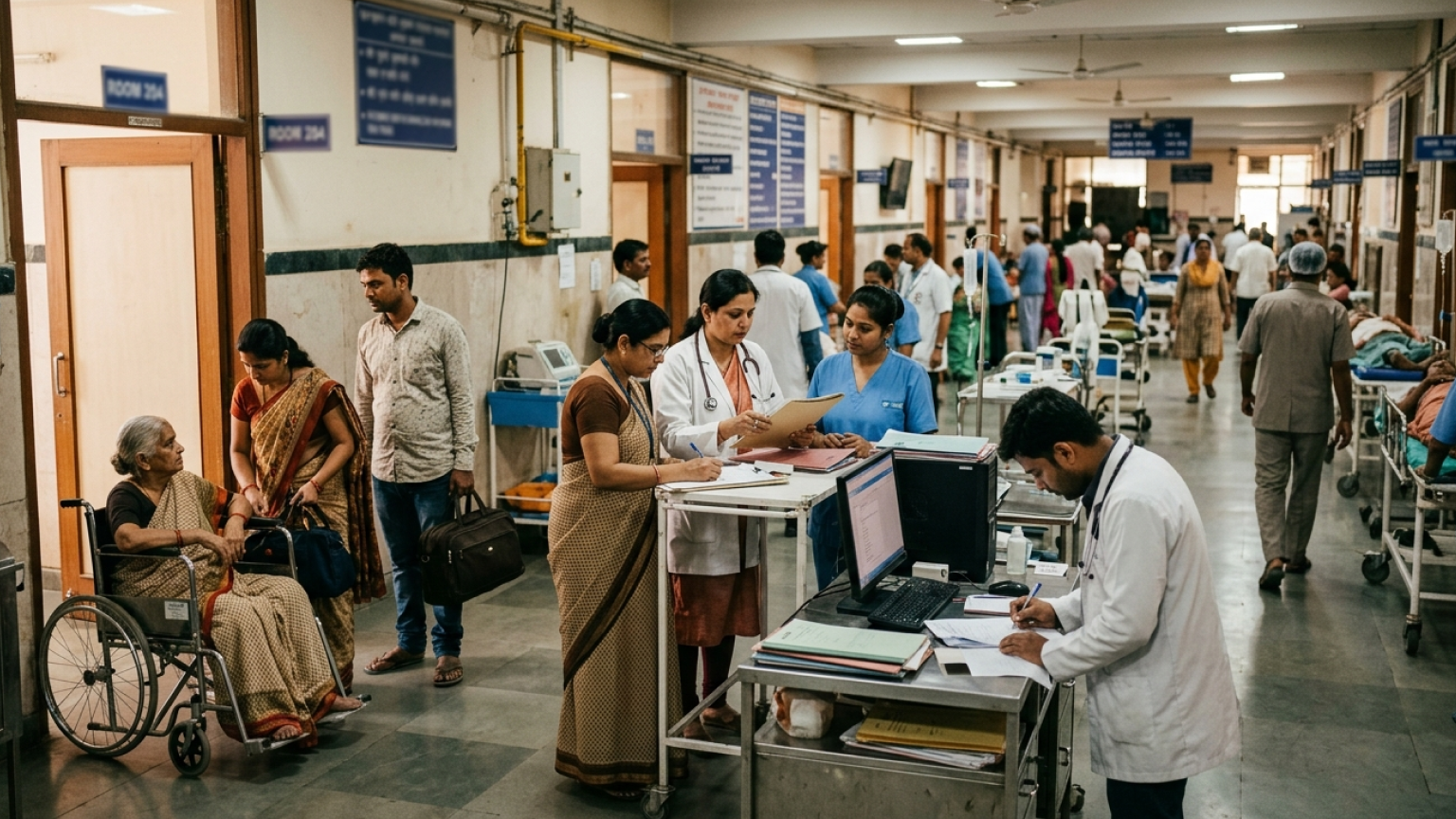
Every delayed discharge affects multiple departments at once.
When discharge documentation is incomplete or delayed:
Even a one-hour delay per patient compounds significantly across weeks and months.
Efficient discharge is not just about patient flow. It directly impacts:
The new standard demands more than planning checklists. It demands intelligent systems.
Hospitals often focus on discharge planning meetings. But the deeper bottlenecks usually lie in documentation and coordination.
Discharge summaries are complex documents. They must include:
Most of this is typed manually.
Doctors move between multiple screens, verify lab results, adjust language, and ensure the format meets accreditation standards.
Each summary may take 20–40 minutes.
Multiply that by 10–15 discharges a day.
The result is fatigue and delay.
Clinical information often sits in separate systems:
Without structured integration, data must be re-entered or manually checked.
This increases error risk and slows finalization.
Hospitals must meet NABH or JCI documentation standards.
Missing fields or unclear documentation can lead to:
Compliance anxiety adds extra review time.
Medical Records Departments often receive incomplete summaries.
They must:
This slows discharge closure and delays claim submission.
The new standard is not just “faster paperwork.”
It is built on four pillars:
AI-assisted drafting replaces repetitive manual typing.
Templates align automatically with accreditation standards.
Clinical data is structured and organized instantly.
Every edit and approval is tracked.
Hospitals that adopt this framework see measurable improvements across operations.

PatientLens AI focuses specifically on discharge documentation — the most time-consuming and compliance-sensitive part of the discharge workflow.
Rather than replacing doctors, it supports them.
Doctors review and approve AI-generated drafts instead of creating summaries from scratch.
PatientLens AI:
Doctors stay in control.
They validate clinical accuracy.
The system handles the heavy lifting.
PatientLens AI is built with compliance at its core.
It offers:
Hospitals retain full ownership and control of their data.
All AI-generated drafts are reviewed by human professionals before finalization. Medical claims require clinical reviewer approval.
This ensures documentation accuracy and audit readiness.
Incomplete discharge summaries are a common cause of billing delays.
PatientLens AI minimizes risk by:
Hospitals report improved claim acceptance rates and faster reimbursement cycles.
Standardized summaries reduce rework.
MRD teams spend less time chasing corrections and more time focusing on quality assurance.
Backlogs shrink.Turnaround time improves.Operational stress decreases.
A 280-bed multi-specialty hospital experienced:
After implementing PatientLens AI:
Administrators saw faster billing cycles and measurable ROI within months.
Improved discharge efficiency leads to:
For hospital leaders, this translates to stability and growth.
For doctors, it means leaving work on time.
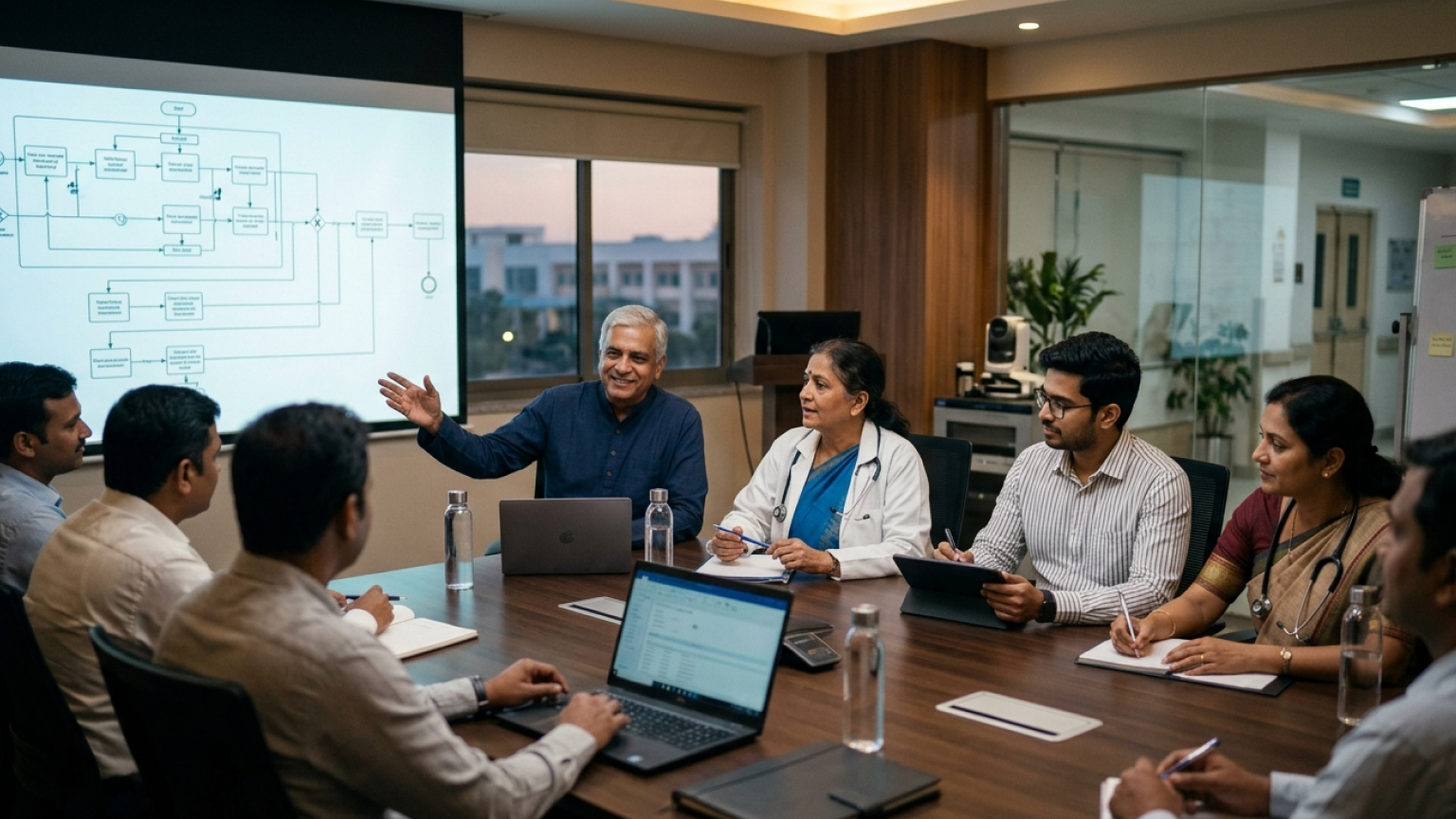
PatientLens AI follows a structured deployment model:
Hospitals maintain full visibility at every step.
There is no loss of oversight.
Only improvement.
When discharge documentation is streamlined:
The new standard is not only operational.
It is human-centered.
Hospitals that continue relying on manual processes will face:
The future belongs to hospitals that adopt intelligent, compliant automation.
PatientLens AI was designed for this reality.
It combines technology, trust, and hospital-level control.
And it turns discharge efficiency into a strategic advantage.

If your hospital is facing:
It is time to modernize your discharge documentation process.
👉 Book a Demo with PatientLens AI today.
Because discharge efficiency is no longer a benchmark.
It is the new standard.
And PatientLens AI is here to help you achieve it.
Hospital discharge efficiency refers to how quickly and accurately a hospital can complete all clinical, documentation, and administrative processes required for a patient to safely leave the hospital. Efficient discharge workflows ensure timely patient transitions, faster bed availability, and smoother hospital operations.
Discharge efficiency directly affects multiple operational and financial metrics, including bed turnover, average length of stay (ALOS), billing timelines, and patient satisfaction. When discharge processes are delayed, hospitals may experience admission bottlenecks, MRD backlogs, and slower revenue cycle performance.
Discharge delays are often caused by manual discharge summary preparation, fragmented hospital systems, incomplete documentation, compliance reviews, and Medical Records Department (MRD) backlogs. These factors can significantly slow the finalization of patient records and billing submissions.
PatientLens AI automates the most time-consuming part of the discharge workflow by generating structured discharge summary drafts using data extracted from hospital systems. Doctors review and approve the summaries instead of creating them manually, significantly reducing documentation time.
No. PatientLens AI supports physicians by preparing structured documentation drafts. The treating doctor always reviews and approves the final discharge summary before it becomes part of the official medical record.
Yes. PatientLens AI is designed to integrate with existing Hospital Information Systems (HIS), EMR, and EHR platforms, enabling hospitals to enhance discharge workflows without replacing their current infrastructure.
PatientLens AI structures discharge summaries clearly, aligns documentation with diagnoses and treatments, and highlights potential documentation gaps. This reduces coding inconsistencies and helps hospitals submit more accurate claims, improving approval rates.
Standardized discharge summaries reduce documentation errors and incomplete records. This helps MRD teams process files faster, reduce rework, and eliminate documentation backlogs.
Yes. PatientLens AI supports NABH and JCI-ready documentation templates, ensuring discharge summaries follow structured formats that meet accreditation and audit requirements.
PatientLens AI is particularly valuable for small and mid-sized hospitals (20–500 beds) that manage high discharge volumes and documentation workloads. These hospitals benefit from faster discharges, improved documentation accuracy, reduced administrative burden, and stronger revenue cycle performance.

AI in Healthcare Writer
A writer exploring the intersection of healthcare, technology, and patient care, bringing clarity to complex topics through engaging storytelling.
Smarter Medical Documentation for Hospitals
Harish Goswami
Jul 11, 2026
5 min read

End Discharge Delays with Patient Lens AI
Harish Goswami
Sep 01, 2025
5 min read
Why AI Discharge Workflows Improve Patient Outcomes
Harish Goswami
Mar 21, 2026
5 min read
Reducing Burnout Through Smarter Workflows
Harish Goswami
Feb 14, 2026
4 min read
AI vs Manual Transcription: Why Hospitals Are Switching
Harish Goswami
May 02, 2026
5 min read
Smarter Records. Better Patient Care.
Harish Goswami
Jul 18, 2026
5 min read
How smarter documentation can unlock revenue, efficiency, and patient trust
Harish Goswami
Oct 16, 2025
5 min read
Why Patient-Centric Discharge Summaries Are Now Essential
Harish Goswami
Apr 04, 2026
6 min read
Better Documentation, Better Patient Outcomes
Harish Goswami
Oct 24, 2025
5 min read