How AI-Generated Summaries Slash 30-Day Readmissions
Why AI Discharge Workflows Improve Patient Outcomes
Thirty-day readmissions remain one of the most critical quality indicators in healthcare.
They affect:
Yet many readmissions are not caused by incorrect treatment.
They happen in the "white space" between hospital discharge and the first follow-up appointment.
This gap — where communication breaks down — is where AI-generated discharge summaries make a measurable difference.
At PatientLens AI, our mission is to help hospitals run smoothly and stay compliant with digital tools for discharge, claims, and medical records management. By strengthening discharge documentation, hospitals can significantly reduce preventable 30-day readmissions.

Hospitals are under constant pressure to lower readmission rates.
High readmissions can lead to:
But preventing readmissions is not just about better inpatient care.
It is about better transition-of-care communication.
And that starts with discharge summaries.
Once a patient leaves the hospital, responsibility shifts.
Primary care physicians, caregivers, and patients rely heavily on the discharge summary to guide next steps.
If this document is:
Risk increases dramatically.
This is where many preventable readmissions begin.
Medication errors are a leading contributor to hospital readmissions.
When discharge summaries fail to clearly reconcile:
Patients may unintentionally misuse medications.
PatientLens AI addresses this directly.
PatientLens AI extracts structured medication data directly from hospital systems and organizes it clearly within standardized discharge templates.
Hospitals using structured AI-assisted reconciliation processes report significantly improved documentation accuracy when validated by clinical review teams.
Doctors review and approve each AI-generated draft before finalization.
This combination of automation and human oversight improves clarity and reduces medication-related confusion.
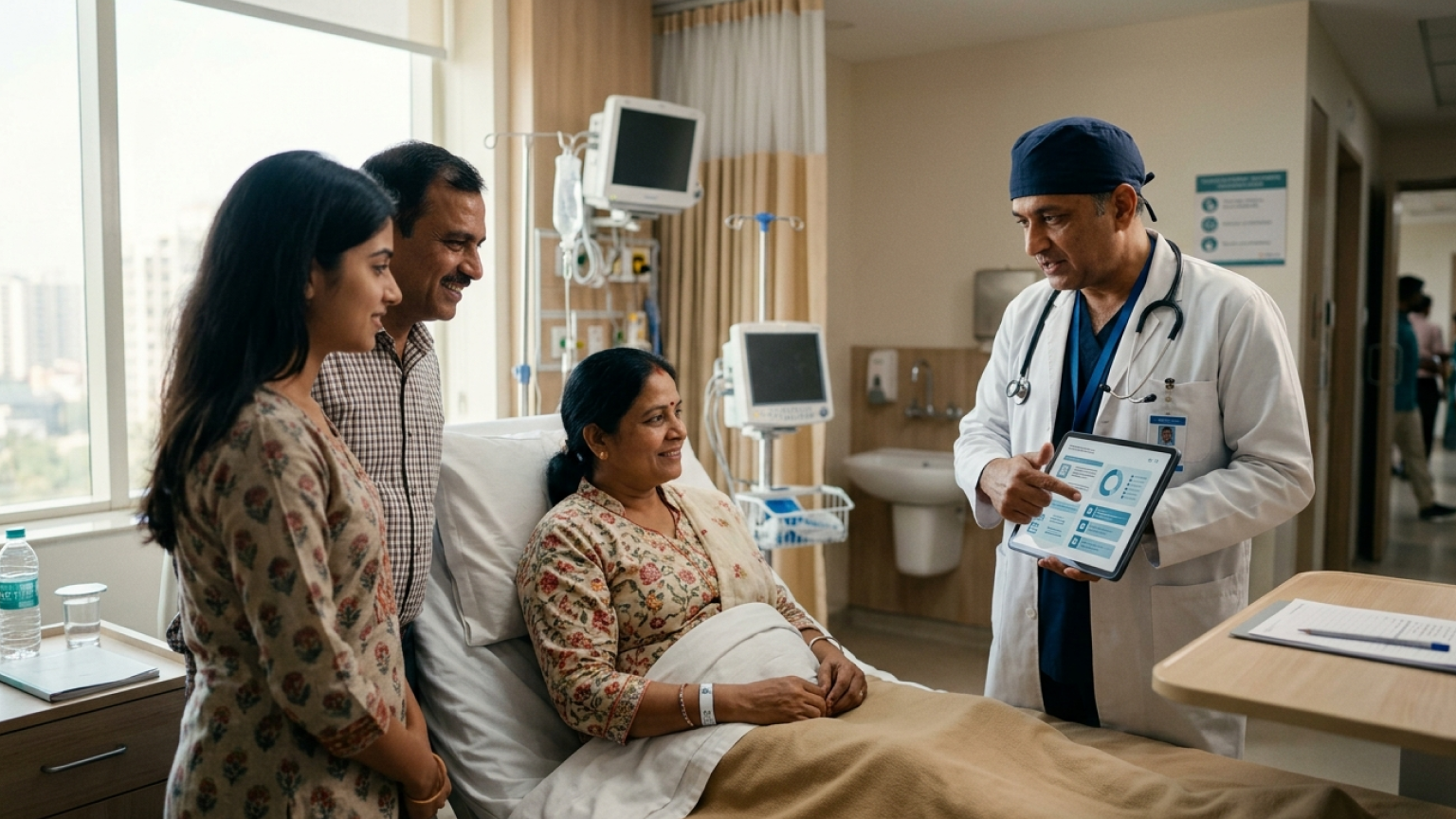
Patients must understand:
Unstructured discharge notes often bury this information in long paragraphs.
PatientLens AI ensures red-flag instructions are:
When instructions are clear, patients respond earlier — preventing complications from escalating.
Discharge summaries are not just for patients.
They guide:
Delayed or inconsistent documentation disrupts continuity.
PatientLens AI generates structured, standardized discharge summaries instantly, ensuring care teams have timely access to accurate information.
This strengthens coordination across the entire care journey.
PatientLens AI sets a new standard for discharge documentation quality.
It provides:
By improving documentation clarity and accessibility, hospitals reduce preventable errors that often lead to readmissions.
Reducing readmissions improves more than clinical outcomes.
Hospitals benefit from:
Improved discharge efficiency also reduces MRD rework and claim clarification cycles.
PatientLens AI supports both quality and financial performance — delivering measurable ROI.

A 300-bed hospital identified frequent readmissions related to medication confusion and incomplete discharge instructions.
Before PatientLens AI:
After implementation:
Hospital leadership reported smoother transitions of care and improved documentation confidence.
AI in healthcare must be safe and accountable.
PatientLens AI is built with compliance at its core:
Hospitals retain complete control of their data at all times.
This ensures patient safety and regulatory readiness.
The PatientLens AI rollout includes:
No disruption.
Only measurable improvement.
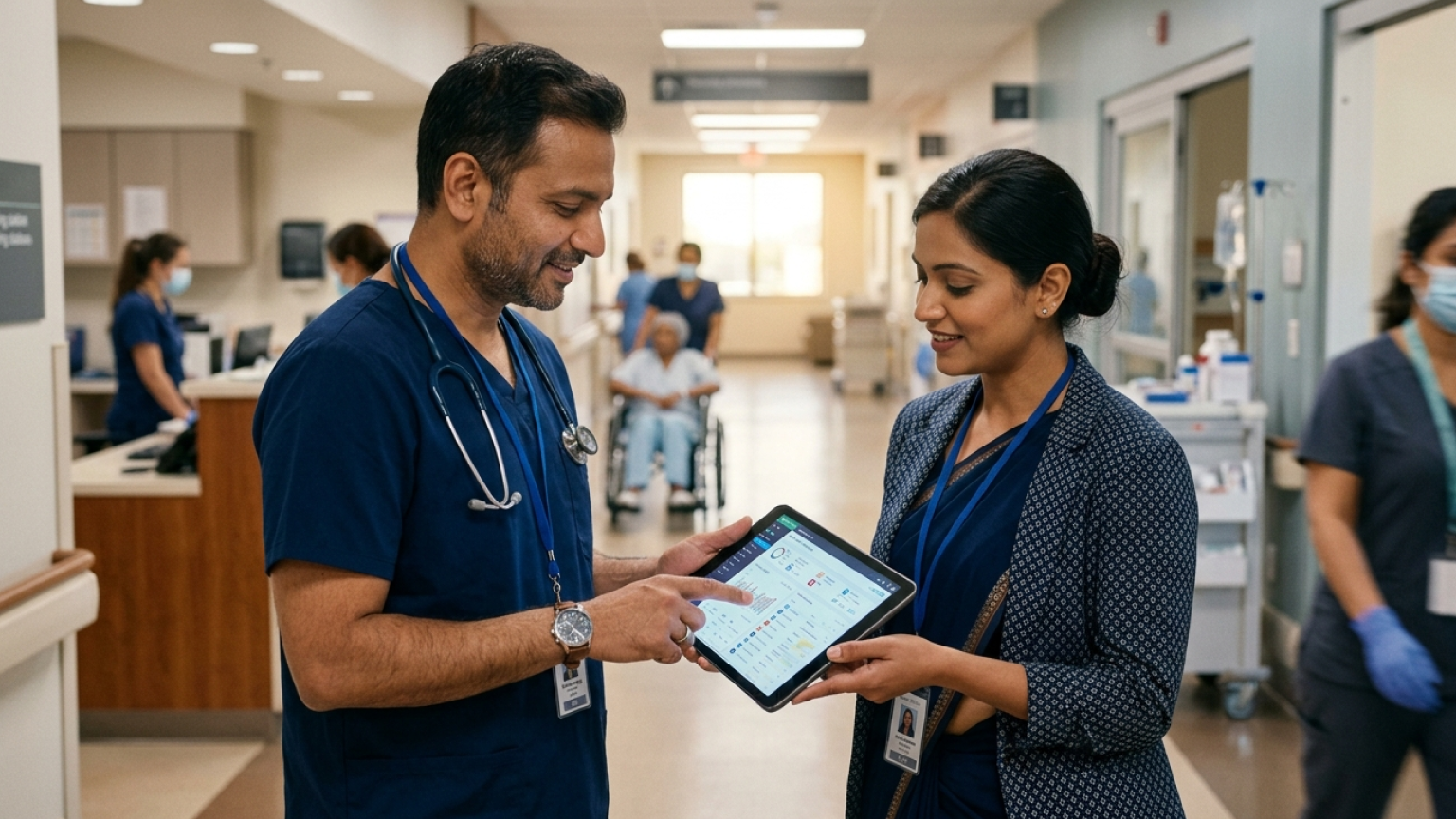
Reducing 30-day readmissions requires more than predictive analytics.
It requires better documentation.
It requires clearer communication.
It requires structured medication reconciliation.
It requires audit-ready discharge workflows.
AI-generated summaries are becoming the new standard for continuity of care.
PatientLens AI combines intelligent automation with human oversight to help hospitals improve discharge accuracy, reduce readmission risks, and protect revenue.
If your hospital is facing:
It is time to modernize your discharge documentation.
👉 Book a Demo with PatientLens AI today.
Because preventing readmissions starts with better discharge communication.
And better discharge communication starts with PatientLens AI.
A 30-day readmission occurs when a patient returns to the hospital within 30 days of being discharged. These readmissions are closely monitored as a key quality metric because they often indicate gaps in discharge planning, medication management, or follow-up care.
High readmission rates can affect hospital quality scores, increase operational costs, and trigger reimbursement penalties under certain healthcare programs. Reducing preventable readmissions improves patient safety, strengthens hospital reputation, and supports financial stability.
Discharge summaries guide patients, caregivers, and physicians on what to do after hospital care. If these summaries are delayed, incomplete, or unclear—especially regarding medications, warning signs, or follow-up instructions—patients may misunderstand their care plan, increasing the likelihood of complications and readmission.
AI-generated discharge summaries organize clinical data into structured, easy-to-understand documentation. By clearly presenting medication instructions, follow-up plans, and red-flag symptoms, they improve communication between hospitals, patients, and care teams, helping prevent avoidable complications.
No. PatientLens AI assists doctors by generating structured drafts of discharge summaries. Physicians review, edit if needed, and approve the final document before it becomes part of the patient’s medical record.
PatientLens AI extracts medication information directly from hospital systems and organizes it clearly in the discharge summary. It highlights new prescriptions, discontinued medications, dosage adjustments, and potential gaps, helping patients and physicians avoid medication errors.
PatientLens AI structures discharge instructions so key information—such as follow-up timelines, warning signs, and medication guidance—is clearly presented. This improves communication among patients, caregivers, primary care physicians, and specialists.
Yes. PatientLens AI integrates with existing Hospital Information Systems (HIS), EMR, and EHR platforms, allowing hospitals to improve discharge documentation workflows without replacing their current infrastructure.
Yes. PatientLens AI supports NABH and JCI-ready documentation templates, ensuring discharge summaries meet structured documentation requirements for compliance and audit readiness.
PatientLens AI is particularly valuable for small and mid-sized hospitals (20–500 beds) that experience documentation delays, medication reconciliation challenges, or discharge workflow inefficiencies. These hospitals benefit from improved documentation clarity, reduced readmission risks, and stronger revenue cycle performance.

AI in Healthcare Writer
A writer exploring the intersection of healthcare, technology, and patient care, bringing clarity to complex topics through engaging storytelling.
A Smarter Approach to Discharge Documentation
Harish Goswami
Mar 14, 2026
5 min read
Smarter Medical Documentation for Hospitals
Harish Goswami
Jul 11, 2026
5 min read
End Discharge Delays with Patient Lens AI
Harish Goswami
Sep 01, 2025
5 min read
Reducing Burnout Through Smarter Workflows
Harish Goswami
Feb 14, 2026
4 min read
AI vs Manual Transcription: Why Hospitals Are Switching
Harish Goswami
May 02, 2026
5 min read
Smarter Records. Better Patient Care.
Harish Goswami
Jul 18, 2026
5 min read
How smarter documentation can unlock revenue, efficiency, and patient trust
Harish Goswami
Oct 16, 2025
5 min read
Why Patient-Centric Discharge Summaries Are Now Essential
Harish Goswami
Apr 04, 2026
6 min read
Better Documentation, Better Patient Outcomes
Harish Goswami
Oct 24, 2025
5 min read